What is a facialist? Definition and role in France
Facialist, beautician, protected title or simple usage: the words get mixed up and French law does not always follow the vocabulary. This article defines the facialist, compares her with the beautician and explains the qualification the law requires to massage a face.
- By The Pommette team
- 7 min read

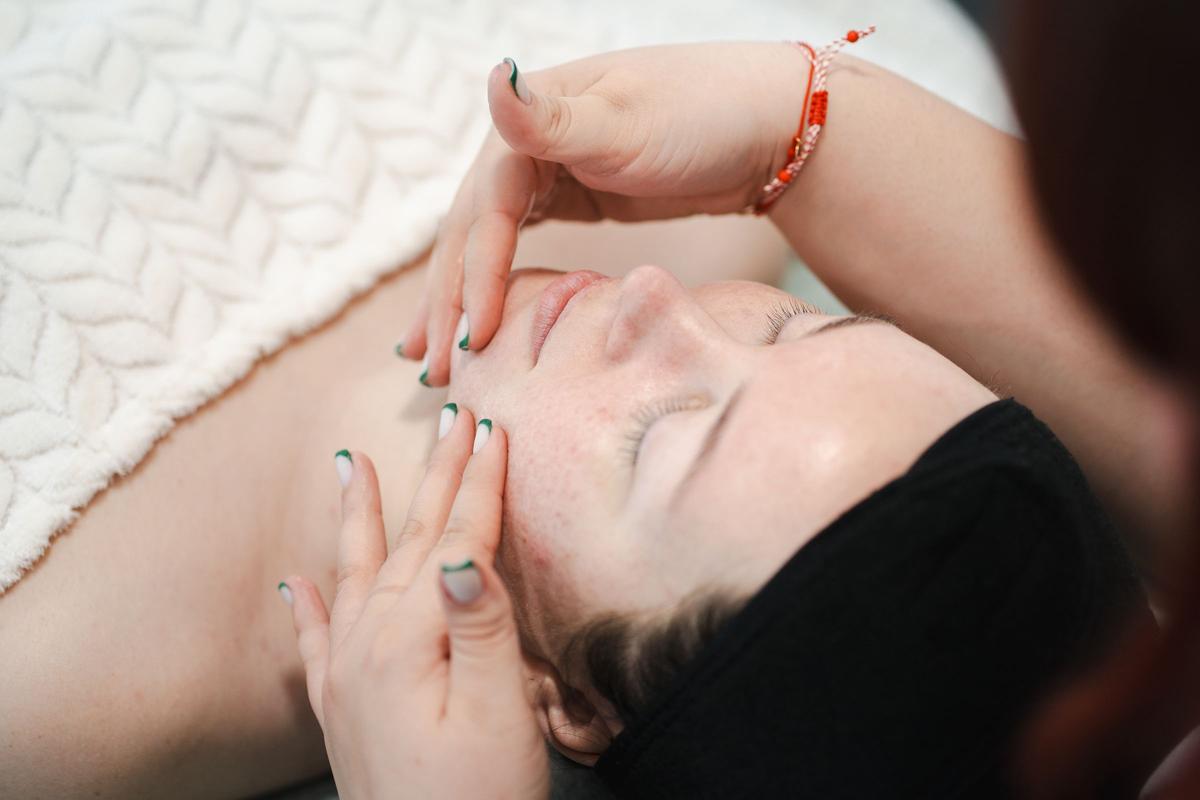
A facialist is a practitioner who focuses on facial treatments: she works on the skin, often with her hands, and offers massage or facial sessions suited to each client. In France, the word is common usage and not an official title: the recognised profession is that of beautician (esthéticienne), and the qualification required depends on what you do, not on the name you give yourself.
What is a facialist?
In everyday use, the word describes a practitioner who concentrates her work on the face, the neck and sometimes the neckline, whereas a general beautician also offers waxing, body treatments or nail care.
What sets a facialist apart is therefore a specialisation, not a status. She builds her menu around a few facial techniques and can follow how a client’s skin changes from one session to the next.
One useful point: there is no official definition. We did not find the word in the list of regulated activities in the French Code de l’artisanat, nor among the job titles on the France Travail profile for beauticians. Be wary of definitions that present the facialist as a profession in its own right with its own diploma.
Facialist or beautician: what are the differences?
In substance, the two jobs overlap. Here is a comparison of the points that really differ.
| Criterion | Beautician | Facialist |
|---|---|---|
| Status of the word | Recognised profession, qualification required | Common usage, no official title |
| Scope | Face, body, hands, feet, hair removal, make-up | Face, neck, sometimes neckline |
| Reference training | CAP, vocational baccalaureate or BTS in beauty, cosmetics and perfumery | No diploma carries this name |
| Legal framework for treatments | Beauty treatments and comfort massage with no medical purpose | The same, as soon as there is a beauty treatment or massage |
| Medical diagnosis | None, refers to a doctor when needed | None, refers to a doctor when needed |
A facialist who massages the face for beauty purposes therefore falls under the same framework as a beautician. That is the subject of the next section.
Is the title of facialist regulated?
The title is not. The activity is. Article L121-1 of the French Code de l’artisanat reserves beauty treatments, other than medical and paramedical ones, and comfort beauty massage with no medical purpose, to a professionally qualified person, or to work carried out under that person’s effective and permanent control. The law defines massage as any superficial external manoeuvre on the skin of the face or body, for an exclusively aesthetic and comfort purpose, either by hand or helped by a device with an aesthetic purpose.
A face massage offered for comfort and appearance therefore falls within this scope, whatever the practitioner calls herself.
According to the Code de l’artisanat, qualification is shown in one of two ways:
- a diploma or title: a CAP, a BEP, or a diploma or title of equal or higher level, registered in the national register of professional certifications and attesting to a qualification in the trade (article R121-1);
- failing that, three years of experience in the trade, as a company head, self-employed person or employee, in France, the European Union or the European Economic Area (article R121-3).
France Travail states that the beautician’s job is open with a CAP in beauty and body care, and lists among the diplomas the CAP in beauty, cosmetics and perfumery, and the vocational baccalaureate and BTS in the same field.
A few days of training in a massage technique therefore does not, in itself, replace this qualification. If your situation is unusual, ask your chamber of trades and crafts (chambre de métiers et de l’artisanat) for advice before you set up. The full path, from the CAP to specialist courses and CPF funding, is set out in our guide to becoming a facialist.
Which techniques does a facialist use?
The menu varies from one practitioner to another. The most common ones are:
- kobido, a Japanese-inspired face massage, whose pricing we cover in our article on the price of a kobido session;
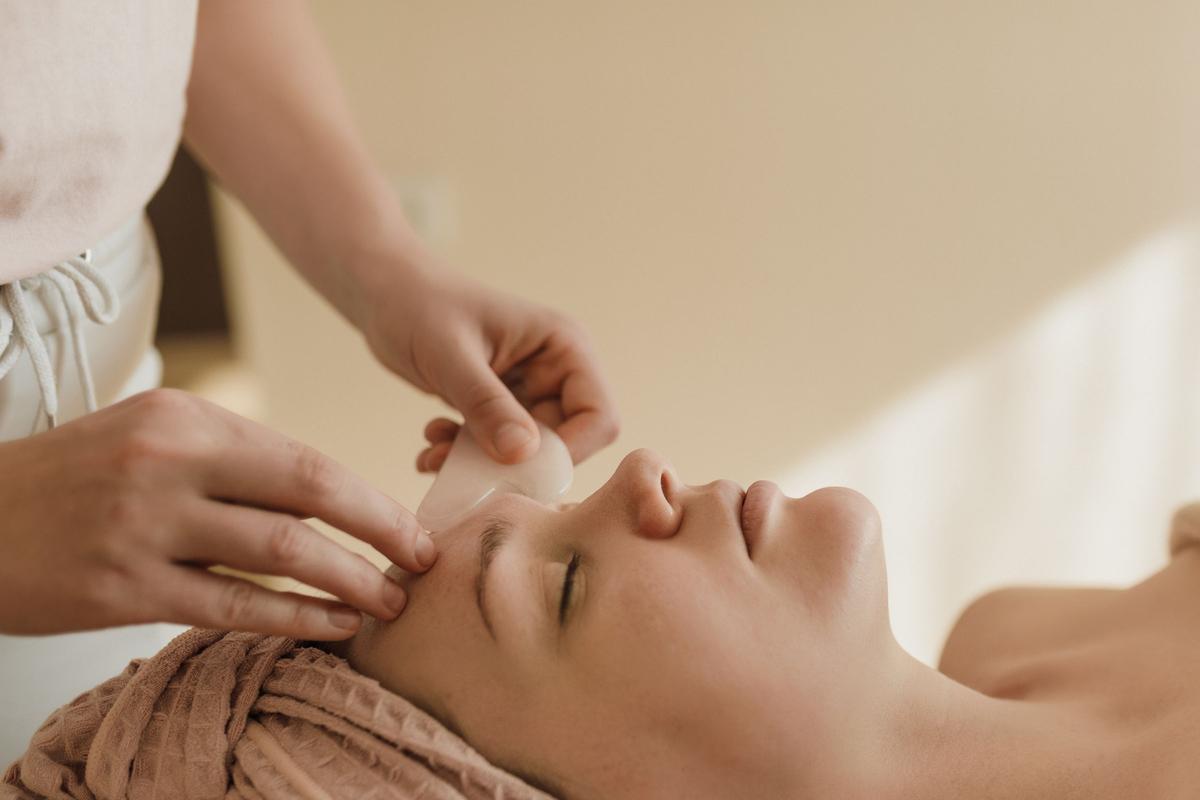
- gua sha, a massage using a flat stone that is glided over the skin;
- facial lymphatic drainage, made of slow movements, whose setup as a course of sessions is covered in our article on organising lymphatic drainage courses;
- face yoga, sequences of guided movements;
- device treatments, such as radiofrequency or microcurrents.
For each technique, a practitioner must be able to answer two questions: when to offer it, and when not to. Both depend on the client’s skin and on her answers before the treatment. For gua sha, we have gathered the contraindications and precautions to know in a separate article.
Your menu also has to stand up financially. Our article on how to work out the price of your facials gives the method, with no imposed figure.
What happens during a session with a facialist?
The sequence varies with the technique, but the same steps generally come up:
- Welcome and questions. Before touching the face, the practitioner asks whether the client is pregnant, whether she is on any treatment, and whether she has allergies or recent facial treatments. These answers may lead to adapting the treatment or not carrying it out.
- Looking at the skin. She looks at the condition of the skin, notes what she sees and agrees with the client what she is after: comfort, glow, relaxation.
- The treatment. Cleansing, then the movements of the chosen technique, with a cosmetic product or an oil, using hands or tools.
- Advice at the end of the session. The practitioner explains how to extend the treatment at home and, where it makes sense, suggests a next session or a course.
The length depends on the technique and on the practitioner. It is shown on her treatment menu: ask when you book rather than relying on an average.
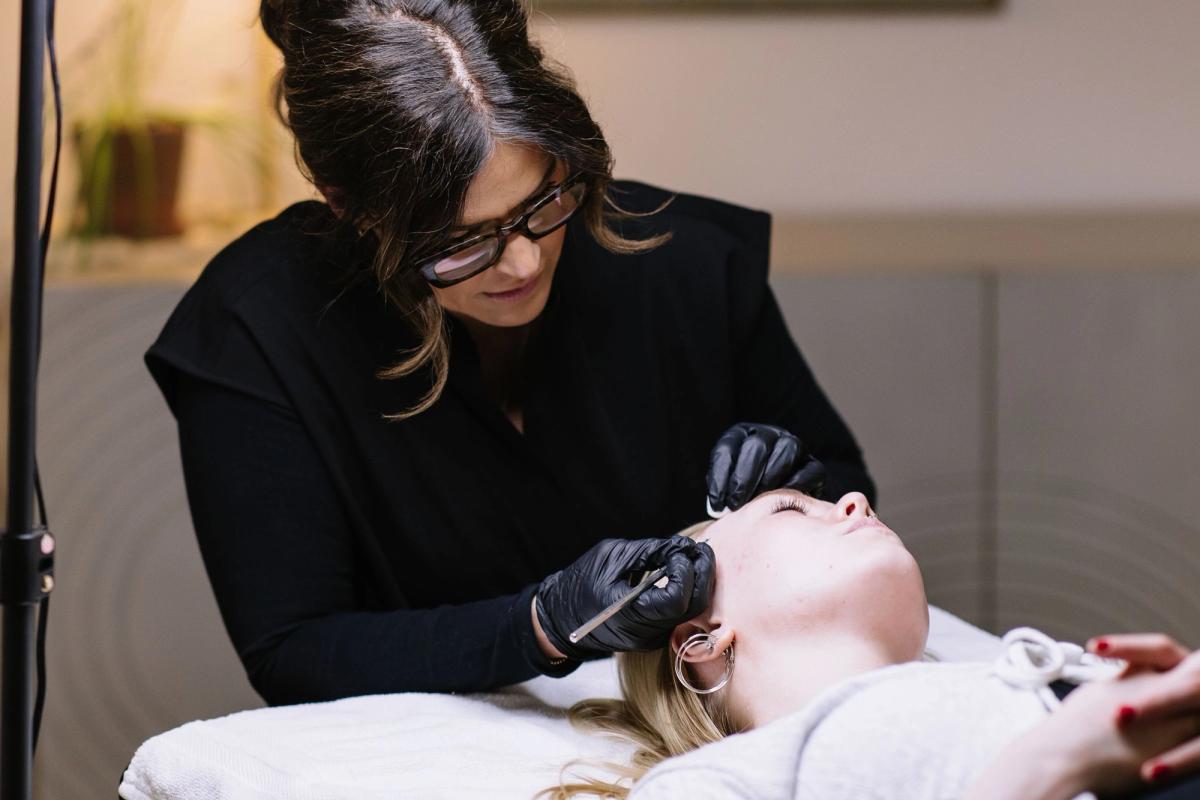
A facialist’s skin assessment remains a beauty assessment. She does not make a medical diagnosis. Faced with a lesion, unusual redness or a doubt about a mole, she refers the client to a doctor and does not offer a treatment.
Frequently asked questions
Do you need a diploma to call yourself a facialist?
The word facialist is not a protected title: nothing forbids using it. However, carrying out beauty treatments or beauty massage on the face requires a professional qualification in beauty care, or working under the control of a qualified person. That qualification is a CAP or a diploma of equal or higher level, or failing that three years of experience in the trade.
What is the difference with a dermatologist?
A dermatologist is a doctor: she makes diagnoses and treats skin diseases. A facialist, like a beautician, carries out beauty and comfort treatments with no medical purpose and makes no diagnosis. If a client has a skin problem, the practitioner refers her to a doctor.
How long does a treatment last?
There is no single length. It depends on the technique, on the practitioner and on what is planned. The length is shown on each practitioner’s treatment menu: ask when you book.
In summary
A facialist is a practitioner who specialises in facial treatments, and the word is not a regulated title. The activity is: a face massage or beauty treatment requires a qualification in beauty care, or work under the control of a qualified person, and comes with no medical diagnosis. Pommette, which opens at the end of 2026, offers a skin assessment and a contraindication questionnaire for facial treatments: see them on the facial treatment software page.
Sources: Légifrance, Code de l’artisanat, articles L121-1, R121-1 and R121-3 (in force on 9 November 2026); France Travail, MétierScope, “Esthéticien / Esthéticienne” profile. Accessed 9 November 2026.