Spa and wellness space management software: what it needs to do
A spa or wellness space needs more than a calendar: several practitioners, rooms that cannot be booked twice, a compliant till. Here are the 8 criteria to check before you sign, and how to test the tool on your own treatments.
- By The Pommette team
- 6 min read
Updated 24 November 2026. Sources consulted: product pages from Zenoti, Pabau and IDEOSENS (see the “Sources” line).
Software for a spa or wellness space has to do three things a plain calendar cannot: handle several practitioners who each have their own hours, treat rooms as something that cannot be booked twice, and keep your till compliant. If a tool misses one of the three, you will end up fixing the schedule by hand. Here are the criteria to check, in order, before you choose.
The essentials
- A spa runs on three resources: the practitioner, the room and the treatment. The software must cross-check them.
- Ask for the till’s compliance certificate in writing before you sign (this applies to salons in France).
- Many vendors only quote prices on request: compare over a year, options included.
Why a basic calendar is no longer enough
Working alone in one room, you manage one schedule. In a wellness space, one appointment ties up a practitioner, a room and sometimes a machine. If any of the three is taken, the slot must not open online.
Spa software vendors say the same: a four-room spa employing six therapists needs each booking to be assigned the right therapist and the right room automatically (guide by Zenoti, a US spa software vendor). That is the gap between a shared calendar and real management software.
The 8 criteria to check
1. A schedule for each practitioner
Each one needs her own hours, days off and list of treatments. Otherwise a client books a lymphatic drainage with a colleague who does not offer it.
Also check that the client can pick her practitioner, or let the software offer the first one available. Regulars often want “their” therapist.
2. Rooms as resources
The software should know your rooms and which treatments each can host: a wet treatment will not fit in a room with no water point. Ask what happens when two appointments target the same room: it should offer another one, not let the double booking through.
If you share equipment (a pressotherapy room, a heated bed), ask whether it counts as a resource too.
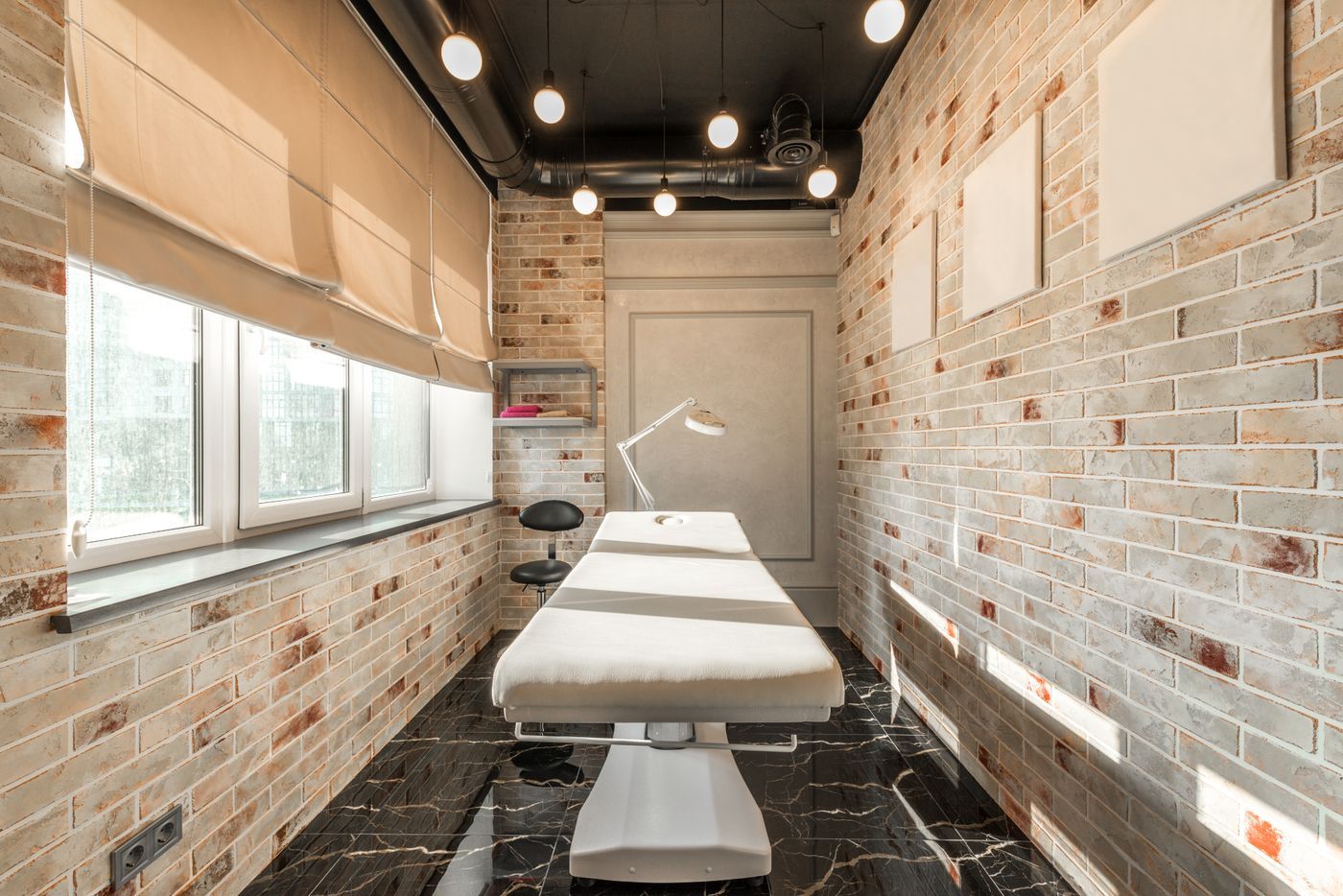 Photo: Max Vakhtbovych, Pexels
3. Reset time between treatments
Ten minutes to change linen, air the room and disinfect. That time should block the room without showing to the client. Without it, appointments run back to back on screen and overlap in real life.
4. Online booking in your name
Clients should book on a page in your name, not on a marketplace where your neighbour appears next to you. Check that a deposit is possible for long treatments or packages, which cuts no-shows. Our guide on missed appointments shows how to limit them without upsetting clients.
5. A compliant till (in France)
In France, if you take payments in your salon, the law requires secure till software, either certified NF525 or covered by the vendor’s certificate. Ask for that document in writing. Our guide on till software for beauty salons sets out the rule and the cases that catch people out.
Some tools have no till at all: they handle booking, deposits and client records, and you take payments elsewhere. That is a valid choice, provided the till you use alongside is compliant.
6. Client records and a contraindications form
A spa sees pregnant clients, clients on treatment and fragile skin. The record should keep the treatment history and contraindications, and the form should be fillable before the first appointment. Check where this health data is hosted: it is a question for the vendor.
7. Courses, packages and gift cards
Multi-session packages and gift cards make up a large share of a wellness space’s sales, especially in December. The software should count down each session by itself and track a gift card balance, with no spreadsheet on the side.
8. The real price, over a year
Several vendors do not publish prices and work on quotes. Others charge each practitioner on top of the base plan. Ask for a written quote that states: practitioners and rooms included, the till, texts, gift cards, and what one more practitioner costs. Multiply by twelve, then add online payment fees.
One address or several?
With a single space, most tools will do as long as they tick the criteria above. If you run two addresses, check that you can switch between sites with one account, that each site keeps its own till and clients, and that a practitioner working at both cannot be double booked.
Pommette, our software, plans practitioner schedules, rooms and switching between salons from one account at its end-of-2026 launch. It is aimed first at small salons and practitioners: if you run a large spa with ten rooms and a restaurant, a heavier system, like the vendors cited above, will suit you better. Our booking software comparison covers the solo practitioner’s case.
How to test before you sign
Ask for a demo with one of your real treatments, not the vendor’s sample data. Have them handle three cases:
- Two clients want the same treatment at the same time, with only one suitable room.
- A practitioner is off on a Tuesday: what does the client see online?
- A client uses the last session of her package: does the software say so by itself?
If the vendor cannot show you these three live, walk away.
 Photo: Andrea Piacquadio, Pexels
Frequently asked questions
What is the difference between booking software and spa management software?
Booking software takes appointments online. Spa management software adds the cross-check between practitioners and rooms, the till, client records, packages and gift cards. For a single room, booking alone is often enough.
Does spa software need a certified till?
In France, if you take payments in your salon, the till must be compliant: certified NF525 or covered by a vendor certificate. If you do not take payments in the software, the till you use instead must be compliant.
Can I manage several practitioners with a free calendar?
A free calendar handles appointments, but not the cross-check with rooms, packages or the till. With two practitioners or more, you will quickly lose the time you saved re-entering appointments by hand.
Do I need different software for a wellness space that offers massages and facials?
No, as long as the software handles durations, reset time and rooms by type of treatment. That is what separates a tool built for treatment trades from one built for hairdressing.
In short
To choose spa management software, check practitioner schedules, rooms, a compliant till, packages and the real price over a year, with a demo on your own treatments. A tool that cannot show these cases live will have you fixing the schedule by hand.
Pommette opens in waves at the end of 2026. Join the waitlist: members keep 30% off for life on the plan of their choice.
Sources: spa management guide, Zenoti, consulted 24/11/2026; spa software, Pabau, consulted 24/11/2026; IDEOSENS brochure, consulted 24/11/2026; Pommette “Team and salons” and “Pricing” pages, consulted 24/11/2026. These vendors sell their own software: their descriptions are cited as examples of criteria, not as a comparison.