Certified till software in a beauty salon: do you need one?
Certificate, statement, NF525, fines: the French rules on till software have changed twice in two years, and many practitioners no longer know where they stand. This article explains who is covered, what your till must guarantee and which proof to keep to hand.
- By The Pommette team
- 5 min read
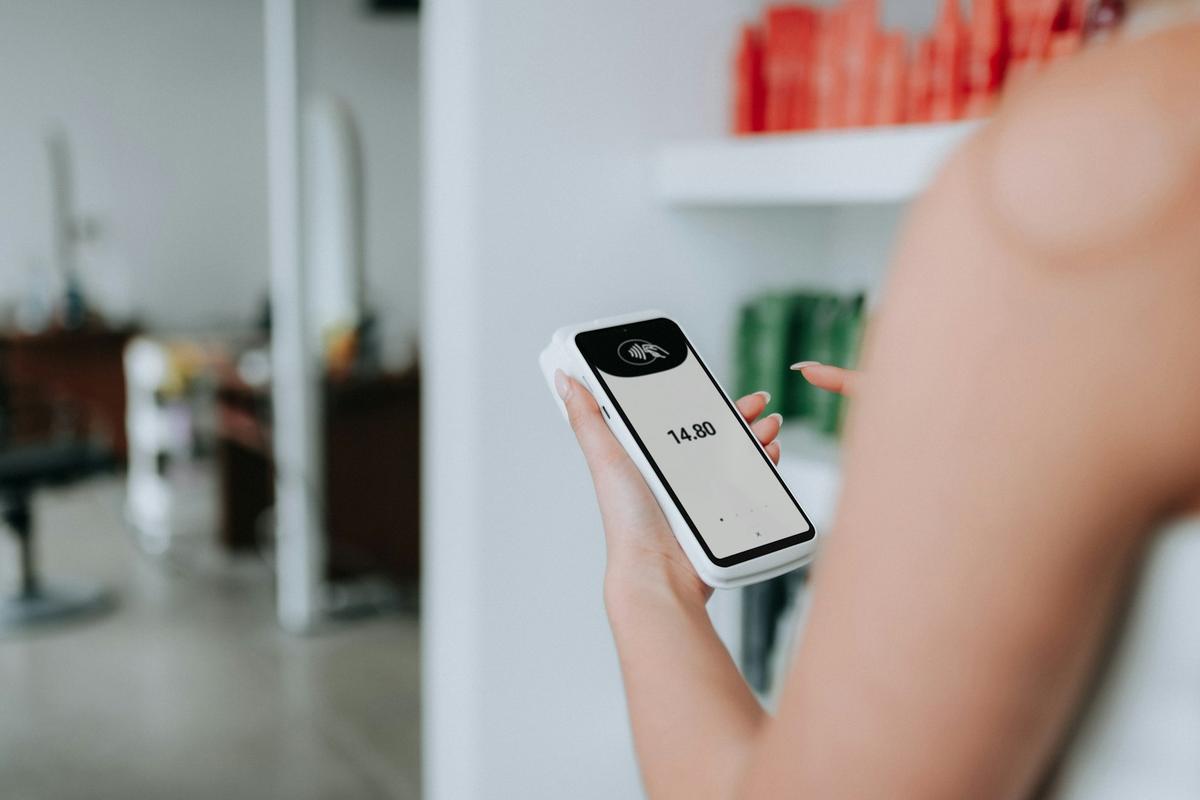
The question comes up every time you change tools: does your till software have to be certified? The answer depends on your VAT status and on how you take payment from your clients. Here is what the French rule really asks for, and how to check the till you already use.
Is your salon covered by the rule?
The rule has applied since 1 January 2018. It covers practitioners who meet three conditions:
- you are registered for VAT;
- your clients are private individuals;
- you record their payments in till software or a till system.
All three must apply at the same time. The law does not require you to have a till. A handwritten sales book is still allowed. But as soon as your payments go through software, that software must be secure.
When the rule does not apply to you
Several situations fall outside the rule:
- the VAT exemption for small businesses, which covers many micro entrepreneurs who are starting out;
- a business that only serves professional clients;
- transactions that are all exempt from VAT;
- payments that all go through a bank.
The last case is rare in a salon: a few banknotes left on the counter are enough to take you out of it.
Watch out: if your turnover goes above the exemption threshold, you become liable for VAT and the rule applies to you. Talk to your accountant before you reach that point, not after.
What if your booking software also takes payments?
Many tools do everything at once: diary, client records, deposits and payments. For this kind of software, only the till function needs to be covered by the proof of compliance, not the whole package. If you take payment for your treatments in your booking tool, its publisher is the one who must give you the proof.
What must compliant till software guarantee?
The law asks four things of your till. They are often summed up in four words.
Inalterability
A recorded sale can no longer be changed or deleted. A mistake is corrected with a new transaction, adding or subtracting, and the original transaction stays visible.
Example: you took €85 for a kobido priced at €80. You do not edit the line, you record a €5 refund. Both transactions stay in the history.
Security
The original data and every correction are protected, along with what is needed to produce the supporting documents. In practice, the till runs regular closings: usually the daily Z report, then monthly and yearly closings.
Retention
The data stays available, line by line, for the whole period during which the tax authorities can audit you.
Archiving
You can export dated archives whose integrity is guaranteed over time. This is what lets you show a full year if you are asked for it.
NF525 certificate or publisher’s statement: which one should you ask for?
To prove that your till meets these four conditions, two documents are accepted.
- The certificate issued by an accredited body. The best known is the NF525 mark, and you will also come across LNE certificates.
- The publisher’s individual statement. A document in your name, issued by the company that publishes the software, following the template set by the French tax authorities.
Both are accepted. This point has caused some confusion in recent months. The 2025 Finance Act planned to abolish the publisher’s statement, then the 2026 Finance Act brought it back. Since 21 February 2026, either one is enough.
What the document must show
Whether it is a certificate or a statement, check that it shows:
- the name of the publisher and the name of the software;
- the version you use;
- your name or your salon’s name, for the statement.
A “compliant” page on a sales website does not count as proof. You need the document itself, which the publisher must send you. If they have not, ask for it in writing.
What do you risk during a tax audit?
If the rule applies to you and you cannot show a certificate or a statement, the fine is €7,500 per till software or system concerned.
The fine is not the only problem. A till that lets you delete sales weakens trust in all your accounts. The audit can then extend to your takings and to the VAT you declared.
How do you check the till you already use?
Take ten minutes this week, between two clients. Open your software and ask yourself these four questions.
- Can you change a past sale without leaving a trace? If so, that is not a good sign.
- Do you get a Z report every day? It shows that closings exist.
- Where is your proof of compliance? Look in your emails or in the software settings, then file it with your accounting papers.
- Does it match your version? After a major update, ask for a document that covers the new version.
Payments that often raise questions
Three everyday situations deserve particular care:
- the deposit paid online when booking, then deducted from the treatment;
- the gift card sold in December and used in March, which we cover in detail in our article on salon gift cards;
- the course of treatments paid upfront then used session by session, as in our advice on creating a treatment package.
Each one must show up properly in your till, at the right time. Ask your accountant once how your software handles them, and write the answer down.
The receipt you give your client
For a service, a receipt is compulsory from €25 including VAT, and must be given on request below that amount. Your till must be able to produce it, printed or by email.
In summary
The rule covers practitioners registered for VAT who take payments from private clients through software, and it does not apply to you while you stay under the small business VAT exemption. Your till must make every sale inalterable, secure, retained and archived. Keep the certificate or the publisher’s personal statement to hand, up to date with your version. Pommette, which opens at the end of 2026, includes a till that meets these four conditions and gives you this statement.