How to price your facials without underpaying yourself
Many practitioners set their prices by looking at nearby salons, then wonder why they work so hard for so little. Here is a simple method to start from your real costs, and know the price below which a treatment loses you money.
- By The Pommette team
- 5 min read
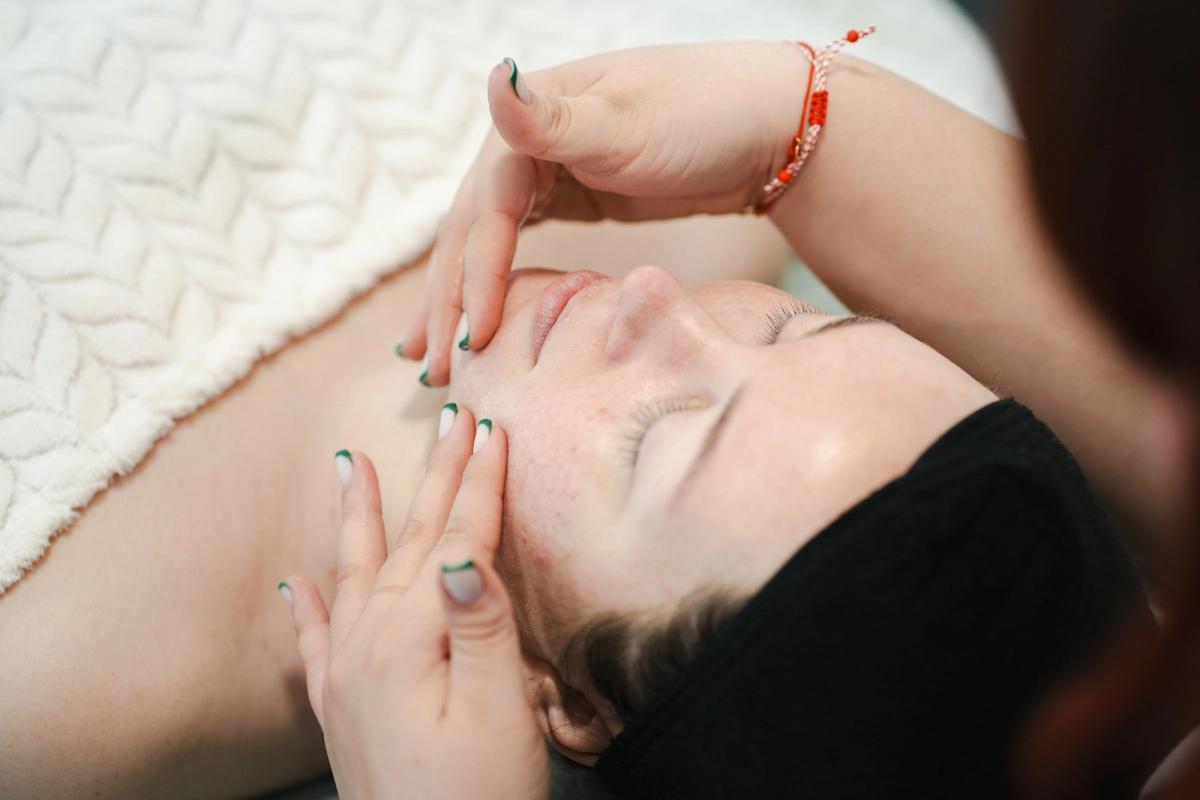
The price of a treatment is not just a reflection of your skills: it has to pay your rent, your products, your social contributions and your salary. If you start from local prices without doing your own sums, you may end up copying other people’s mistakes. The right method takes four steps, then a check against the market. The sums are the same if you call yourself a facialist: our article on what a facialist is explains the framework.
Step 1: add up your fixed costs
These are the expenses you pay every month, whether you do one treatment or fifty:
- the rent for your treatment room or your share of the premises, electricity, water, internet;
- professional insurance and banking;
- your software (booking, till, website) and your phone;
- laundry, small equipment that wears out, marketing;
- training, spread over the months.
Add them up over a year, then divide by 12: some expenses only come once a year and would distort a single month.
Step 2: count the hours you actually bill
This is the step most often forgotten. A week in the treatment room is not 35 hours of treatments: there is setting up between clients, cleaning, messages, bookkeeping, orders, and slots that stay empty.
For two or three weeks, write down the time you actually spend treating clients, and only that time. This is the number of hours that has to pay for all your costs.
A one-hour treatment often takes more than an hour of your day: welcoming the client, setting up, cleaning. Count that time in the length of the slot, not in your billed hours.
Step 3: add the cost of products
For each treatment, estimate what you use: cleanser, serum, mask, oil, cotton pads, disposable linen. The simplest way is to divide the price of a bottle by the number of treatments it gives you. A few euros per treatment, but it varies a lot from one protocol to another.
Step 4: set the pay you are aiming for
Decide what you want to earn each month to live, then add what your social contributions and taxes cost you, depending on your business status. Your accountant can give you the right order of magnitude. Do not skip this step: a practitioner who pays herself “with whatever is left” often ends up paying herself nothing. To put this figure in context, our article on esthetician salary in France gives the collective agreement pay scale and a step by step calculation for a self-employed beautician.
The calculation, with an example
Take a self-employed practitioner. The figures are examples, to replace with your own:
- fixed costs: €1,200 a month;
- hours actually billed: 80 hours a month (about 20 a week);
- target pay, contributions included: €2,500 a month;
- products for a one-hour facial: €6.
The calculation for one hour of treatment:
- costs: €1,200 ÷ 80 h = €15;
- pay: €2,500 ÷ 80 h = about €31;
- products: €6.
Total: about €52 before VAT. This is your floor price: below it, every treatment costs you money. If you charge VAT, add it on top (€62.40 including 20% VAT in France).
For a 90-minute treatment, or a body drainage that uses more product, redo the calculation with its own length and products: do not just add a few euros to the one-hour price. If you practise kobido, our guide to kobido booking software shows how to fit these lengths into your diary, and our article on kobido session prices applies this calculation step by step, training included.
Then compare with the market
Once you know your floor price, look at the prices of practitioners near you, for treatments of similar length and technique.
- Your floor price is above the market? Do not cut blindly. First try to fill your empty slots, reduce a cost, or explain better what makes your treatment valuable (skin assessment, protocol, follow-up).
- You are well below the market? You probably have room to raise your prices, and a price that is too low can also worry a client looking for an expert.
Present your prices with care
- Always show the length next to the price: that is what lets clients compare.
- Describe what the treatment includes in two lines: assessment, steps, home-care advice.
- Offer courses of several sessions at a slightly lower price per session: the client commits, and your diary fills up in advance. To build these offers without eating into your margin, see our article on salon treatment packages.
- Clients must be able to see your prices before the treatment, in your treatment room as well as on your booking page.
Raising your prices without losing clients
Review your calculation once a year: your costs and products go up, so your prices should follow. Tell your clients a few weeks ahead, in one simple sentence, without long justifications. You can keep the old price for courses already bought: clients appreciate it, and it costs you almost nothing.
In short
Start from your costs, divide them by the hours you actually bill, add your pay and your products: that gives you your floor price. Then compare it with the market, show your treatments with their length, and review your prices every year. A well-calculated price is what lets you keep caring for your clients well.