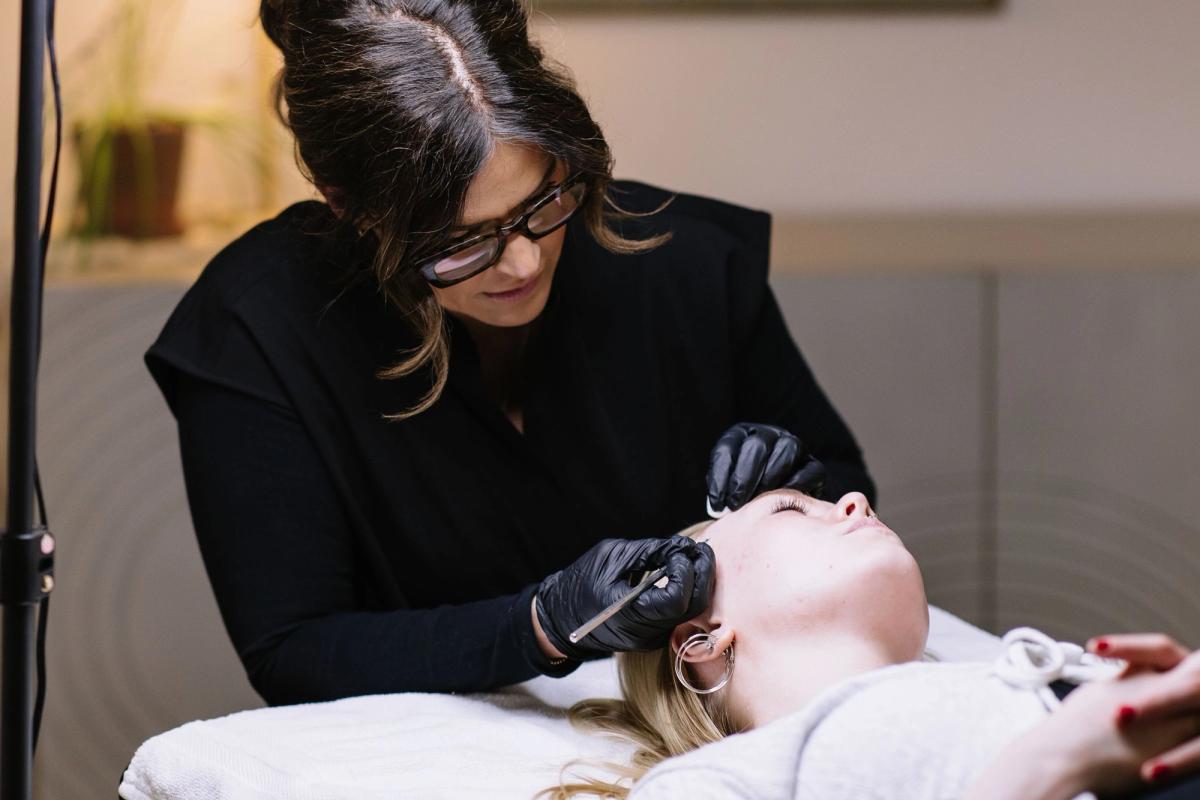
Lymphatic drainage: beauty therapist or physio, the limits
Lymphatic drainage in a salon is legal as long as it stays aesthetic. Here is what French law says, what a physiotherapy session costs, the words to remove from your menu and when to refer a client to a doctor.
- By The Pommette team
- , updated on
- 9 min read
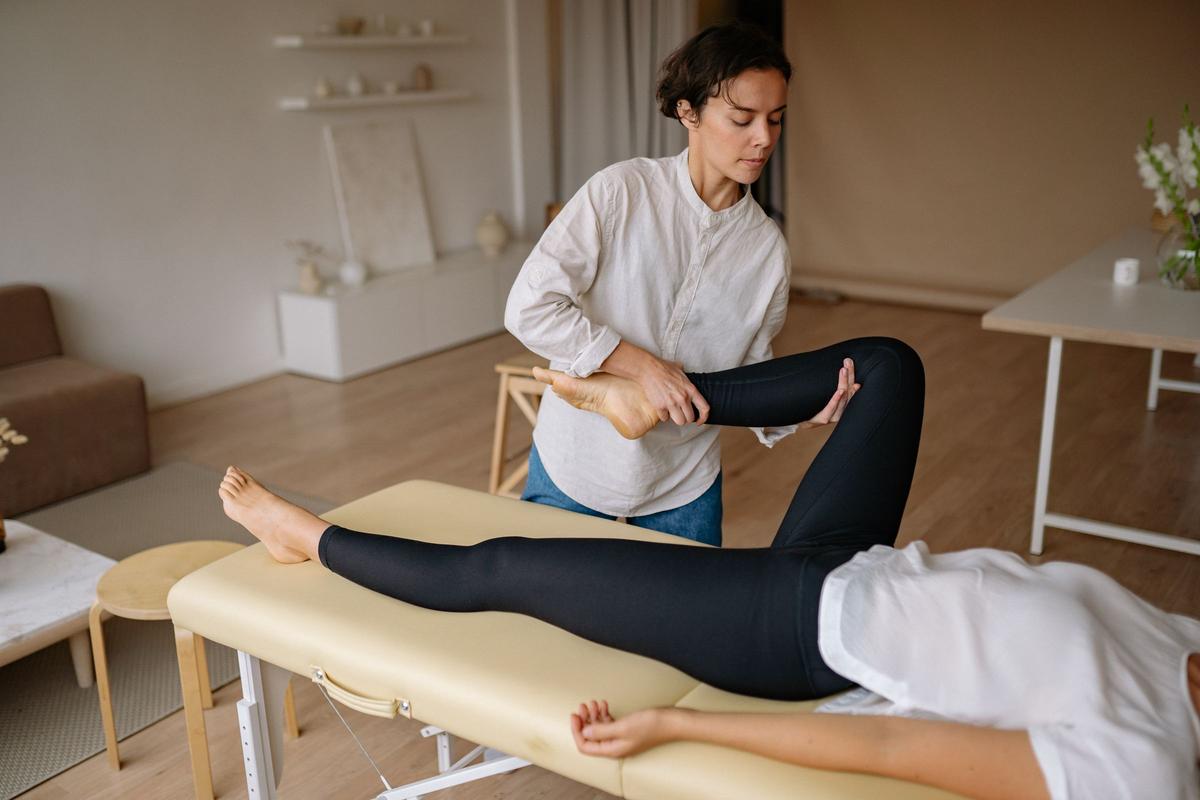
Updated 23 November 2026. Legal texts and French Health Insurance pages checked on 14 November 2026.
No, lymphatic drainage in a salon is never reimbursed by the French Health Insurance (Assurance Maladie). Only manual drainage carried out by a physiotherapist to treat true lymphoedema is, usually on a doctor’s prescription, at €17.68 or €19.89 per session.
Your clients will ask before they book. Here is what the law says, what separates the two practices, what you can answer without leaving your field, the words to remove from your treatment menu, and the right way to refer a client to a health professional.
What does French law say about massage and drainage?
Two sets of rules meet here: the one that governs your profession and the one that protects physiotherapists.
On the beauty side, article L121-1 of the French crafts code reserves for a qualified person “aesthetic care other than medical and paramedical care, and aesthetic comfort massages with no medical purpose”. It defines this massage (modelage) as a superficial external manoeuvre on the skin of the face and body, “for an exclusively aesthetic and comfort purpose, excluding any medical and therapeutic purpose”.
On the health side, the public health code describes what a physiotherapist (masseur-kinésithérapeute) does. Article R. 4321-5 lists, among the rehabilitation treatments carried out on prescription, that of “vascular and lymphatic trophic disorders”. Article R. 4321-7 states that, for these treatments, the physiotherapist may perform “massages, in particular manual lymphatic drainage”.
One question remained: does every massage belong to physiotherapists? The Cour de cassation answered it on 29 June 2021 (criminal chamber, appeal no. 20-83.292). It ruled that only a massage aimed at preventing the loss of functional abilities, helping to maintain them or restoring them is a physiotherapy act. A wellbeing massage, with no therapeutic purpose and no confusion with a medical treatment, is not illegal practice.
That confusion is exactly what costs dearly. Article L4323-4 of the public health code punishes the illegal practice of physiotherapy with two years in prison and a €30,000 fine, rising to five years and €75,000 when the offence is committed through an online service. Your booking page and your Instagram account count.
Aesthetic drainage or medical drainage: what is the difference?
The movements can look alike. The framework has nothing in common.
| Aesthetic drainage in a salon | Drainage with a physiotherapist | |
|---|---|---|
| Purpose | Comfort, feeling of lightness, wellbeing | Rehabilitation of a disorder, such as lymphoedema |
| Who performs it | Qualified beauty therapist | Physiotherapist with a state diploma, registered with the Order |
| Prescription | None | Usually a doctor’s prescription |
| Before the session | Contraindications form, no diagnosis | Physiotherapy assessment |
| Price | Free, set by the salon | Health Insurance agreed rate |
| Reimbursement | None | 60% of the agreed rate when the indication qualifies |
| Common methods | Aesthetic manual drainage, Brazilian methods such as Renata França, aesthetic pressotherapy | Manual lymphatic drainage, bandaging, pressotherapy as part of a treatment |
Keep one idea in mind: you work with a healthy person who wants to feel better. As soon as there is an illness, recent surgery or swelling to treat, it is no longer your field.
How much does lymphatic drainage cost with a physiotherapist in France?
Your clients ask this when they compare. The answer is set by the Health Insurance fee schedule (NGAP, title XIV, article 7). According to the practical NGAP guide for physiotherapy published by the Assurance Maladie, rehabilitation of true lymphoedema by manual drainage is coded as follows:
| Act | Code | Stated length | Agreed rate in mainland France |
|---|---|---|---|
| True lymphoedema, one limb or the neck and face | RAV 8 | About 30 minutes | €17.68 |
| True lymphoedema, two limbs | RAV 9 | About 30 minutes | €19.89 |
| Multilayer bandaging supplement | RAV 1 or RAV 2 | €2.21 or €4.42 |
The calculation uses the value of the key letter, set at €2.21 in mainland France since 22 February 2024 according to the agreed rates page on ameli.fr. The Health Insurance reimburses 60% of that rate, and a top up health insurance can cover the rest.
The same guide is clear on a point that concerns you directly: manual drainage is a technique, not a reimbursable act in itself. Heavy legs and isolated thread veins, like “comfort or aesthetic” indications, are never reimbursed, even when a specialist wrote the prescription.
These figures are not a benchmark for your own price. A reimbursed physiotherapy session and a one hour aesthetic drainage in your treatment room do not have the same length, the same goal or the same costs. To set your price, start from your hourly cost and your products, as in our method for pricing your treatments.
What do you say to a client who asks if it is reimbursed?
The answer fits three cases. It stops you promising what you cannot deliver, and from letting a client believe a salon treatment replaces medical care.
| What the client says | What you answer |
|---|---|
| “Will my drainage with you be reimbursed?” | No, an aesthetic wellbeing treatment is not covered by the Health Insurance. |
| “I have lymphoedema, or I have just had surgery.” | She needs to see her doctor: if drainage is prescribed, a physiotherapist will do it. You resume treatments with her doctor’s agreement. |
| “My top up insurance covers wellbeing.” | It depends on her policy: suggest she asks her insurer, without guaranteeing anything. |
A few simple precautions. Do not issue an invoice or a receipt that suggests a medical act: describe an aesthetic wellbeing treatment, with your salon’s name and the price paid. And if a client asks for a receipt “for the Health Insurance”, say that your treatment does not give a right to reimbursement.
If she hesitates between you and a physiotherapist, do not treat it as competition. A physiotherapist treats a disorder, you offer a moment of relaxation and comfort: explain the difference calmly and she will come back more willingly.
Which words should you avoid on your treatment menu?
This is often where it all plays out. A client, a competitor or a physiotherapist reading your menu first judges what you promise.
| Remove | Use instead |
|---|---|
| Therapeutic treatment, treatment | Aesthetic treatment, wellbeing treatment |
| Heals, cures, eliminates cellulite | Gives a feeling of lightness and relaxation |
| Post operative drainage, after liposuction | Nothing: refer to the surgeon or physiotherapist |
| Patient, rehabilitation session | Client, session, ritual |
| Against oedema, water retention, swollen legs | For a feeling of lighter legs |
| Diagnosis, lymphatic assessment | Chat before the treatment, questionnaire |
| Reimbursed, covered | Say nothing on this point |
Add a simple sentence under the treatment description, for example: “Aesthetic wellbeing treatment with no medical purpose. It does not replace medical advice.” Do the same on Instagram and on your booking page, where people often copy a description found elsewhere without rereading it.
Client reviews deserve a look too. If a client writes that your drainage “cured her lymphoedema”, do not repeat the sentence in your posts.
When should you refer a client to a doctor or physiotherapist?
You do not make a diagnosis. Your role is to spot what falls outside the aesthetic framework and to say, calmly, that medical advice is needed before the treatment.
Some situations should make you pause the booking: a client who mentions recent swelling or swelling on one side only, pain, recent surgery, ongoing treatment or medical follow up. In these cases, advise her to see her doctor, who will judge whether drainage is useful and whether a physiotherapist should do it.
In practice, three habits protect everyone. Have a contraindications form filled in before the first treatment, and reread it at the start of each course. Note in the client record, with the date, that you recommended she see a doctor. And when there has been a doubt, only resume sessions with the doctor’s written agreement.
If you sell courses of treatments, allow in your terms for a course to be paused for medical reasons. Our guide to scheduling lymphatic drainage courses explains how to plan sessions without losing track.
Frequently asked questions
Is lymphatic drainage reimbursed by French Health Insurance?
Yes with a physiotherapist, no in a salon. The Assurance Maladie reimburses 60% of manual drainage for true lymphoedema, usually on a doctor’s prescription, rated €17.68 for one limb or the neck and face and €19.89 for two limbs. Aesthetic drainage in a salon is never reimbursed.
Can a beauty therapist do lymphatic drainage in France?
Yes, if the treatment is presented and performed for an aesthetic, comfort purpose. Article L121-1 of the crafts code allows aesthetic massages with no medical purpose, and the Cour de cassation ruled in 2021 that only therapeutic massages are reserved for physiotherapists. Drainage of lymphoedema or of swelling after surgery remains a health act.
Can my client be reimbursed by her top up insurance?
It depends on her policy, and the texts cited here do not settle it. Suggest she asks her insurer, and promise her neither a reimbursement nor a receipt for it.
Can you call salon drainage a “therapeutic treatment”?
No. The word announces a medical purpose, which the law excludes from aesthetic massage. Talk about an aesthetic or wellbeing treatment, and add that it does not replace medical advice.
Do you need specific training to offer aesthetic drainage?
The law requires a beauty qualification to perform aesthetic massages. The texts cited here do not additionally require a certificate for a specific method, but serious training helps you master the technique and explain the treatment well.
In summary
Medical drainage, with a physiotherapist, is reimbursed at 60% when it treats true lymphoedema. Salon drainage never is: it stays aesthetic, with no promise of healing, no patients and no post operative work. Reread your menu with the table of words to avoid, answer the reimbursement question calmly, and keep a written note every time you refer a client to her doctor. Pommette, which opens at the end of 2026, brings together the contraindications form and the client record in one tool at launch: join the waitlist for 30% off for life.
Sources: French crafts code, article L121-1; public health code, articles R. 4321-5, R. 4321-7 and L4323-4 (Légifrance); Cour de cassation, criminal chamber, 29 June 2021, no. 20-83.292; Assurance Maladie, practical NGAP guide for physiotherapy (2026) and physiotherapists’ agreed rates on ameli.fr. Accessed 14 November 2026.